Dress for walking, waiting and changing temperatures
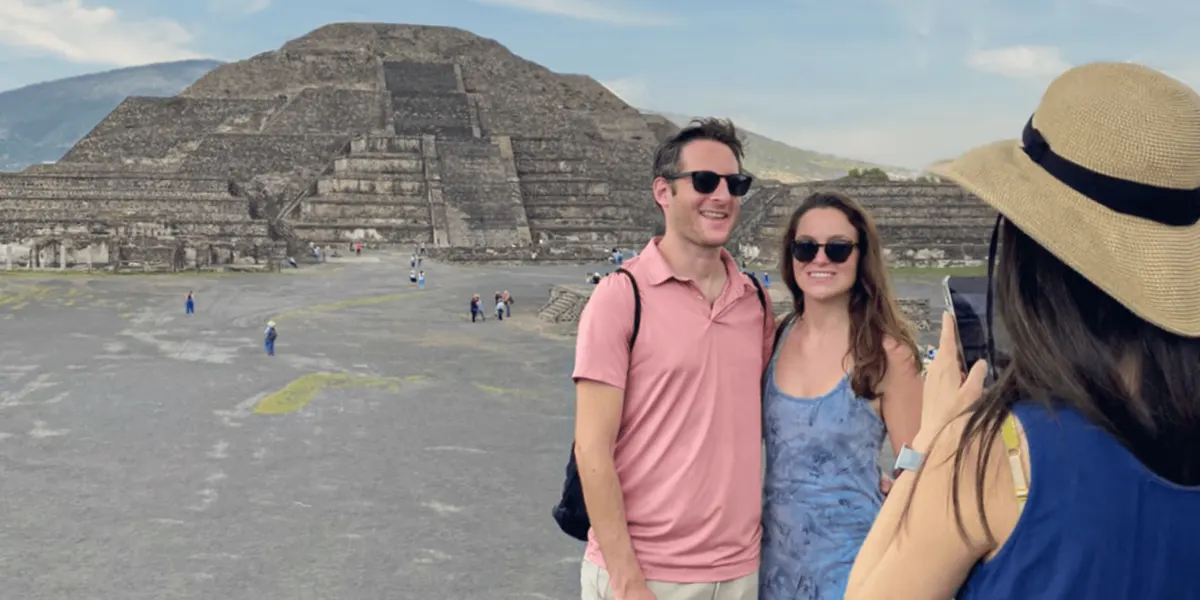
Your clothing needs to work while you walk and while you stand listening to a guide. Choose familiar shoes with a secure fit and a sole suited to uneven surfaces. New footwear that feels fine in a hotel room can become distracting over a long archaeological route. Comfortable walking clothes matter more than dressing for a single photograph.
A removable outer layer is useful for an early departure, particularly in the November–February period. Carry it in a small bag once you warm up. Avoid relying on a thick garment you cannot comfortably carry for the rest of the visit. Check Teotihuacán’s forecast, not just the weather beside your Mexico City hotel.
A compact packing list
| Bring | Why it earns space |
|---|
| Comfortable, secure walking shoes | The visit involves prolonged walking on varied surfaces |
| Hat and sun protection | Much of the route is exposed |
| Removable layer | Early starts and later walking can feel different |
| Reusable water bottle | Carry water through the visit |
| Small day bag | Keeps hands free and essentials together |
| Saved voucher and meeting pin | Makes the departure and return easier |
INAH specifically recommends comfortable footwear, sun protection and water in a reusable container. It also prohibits bringing food into the archaeological zone. Plan meals outside the visit instead of packing a picnic for the main avenue. Official preparation guidance
.
What to change for a balloon morning
Use the instructions from your booked operator. Boarding a basket and remaining in it require different movements from sitting in a sightseeing vehicle. Ask about suitable footwear, loose items and what can be carried aboard. A warm layer before takeoff does not remove the need to think about clothing for the archaeological walk afterwards.
Keep anything essential secure and easy to reach. Do not bring bulky equipment merely because it looks useful in a travel photograph. If you plan professional photography or specialist gear, check permission requirements with the relevant provider and the archaeological authority rather than assuming an ordinary ticket covers it.
Packing for children and mixed-pace groups
For a family, distribute the practical items so one person is not carrying everything. Put the layer each child may need somewhere accessible. Check the meal plan in advance because a hungry child and a long fixed itinerary are a difficult combination, especially when food cannot be taken into the zone.
If someone in the party needs a shorter route, arrange that before choosing a departure. Clothing cannot solve a route that is too demanding. Our family guide
and time-at-the-site guide
help you decide how much walking to plan.
Leave unnecessary items behind
Pack for the booked activity rather than every possible activity in the area. Bikes and drones are not allowed in the archaeological zone. Keep valuables and luggage manageable, and confirm any storage arrangements rather than assuming the vehicle or site will hold a large bag.
Before leaving, check three things: the local forecast, the exact meeting instructions and any operator-specific requirements. If rain is forecast, ask how your tour handles the day and choose appropriate clothing. For a flight, let the operator make the operational weather decision; a packing checklist cannot establish whether a balloon will fly.